Daijiworld Media Network - Mumbai
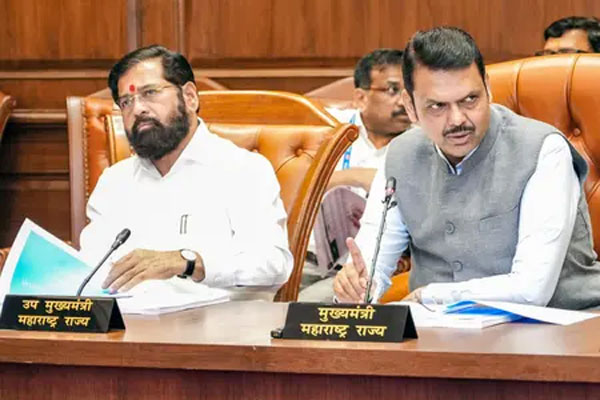
Mumbai, Jun 16: In a major push to healthcare and rural infrastructure, the Maharashtra Cabinet, chaired by Chief Minister Devendra Fadnavis, on Tuesday approved a Rs 300-crore High-Energy Medical Cyclotron Project (HEMCP) in Nagpur and cleared the Maharashtra Rural Drinking Water Policy 2026.
Rs 300-Crore Cyclotron Project to Boost Cancer Care
The High-Energy Medical Cyclotron Project will transform Nagpur into a radiopharmaceutical innovation hub, significantly improving access to advanced cancer diagnosis and treatment facilities in Central India.
The project is expected to reduce dependence on major healthcare centres such as Mumbai and Hyderabad by ensuring the local production and availability of critical radioisotopes used in PET-CT scans and nuclear medicine procedures.
The project cost will be shared equally between the Medical Education Department and the Industry Department, with each contributing Rs 150 crore. The Medical Education Department will immediately release its share of the funds.
The state government has also approved a 30-hectare land parcel at Bhansoli (Kinhi) in Hingna taluka for the facility.
Officials said Nagpur's central location makes it an ideal destination for the project, enabling it to serve patients living within a 500-kilometre radius across Maharashtra, Madhya Pradesh, Chhattisgarh, Telangana and Andhra Pradesh.
The facility will also leverage existing healthcare institutions, including All India Institute of Medical Sciences Nagpur, National Cancer Institute and Government Medical College and Hospital Nagpur.
Dedicated SPV to Oversee Project
The government said the project will be implemented through ‘Mahacare’ under a dedicated Special Purpose Vehicle (SPV) established under the Companies Act, 2013.
Until the SPV is formally constituted, a steering committee headed by Shrikar Pardeshi will supervise the implementation process.
New Rural Drinking Water Policy Approved
The Cabinet also approved the Maharashtra Rural Drinking Water Policy 2026, aimed at ensuring a sustainable and reliable supply of safe drinking water to rural households in line with the state's Viksit Maharashtra 2047 vision.
The policy introduces a comprehensive framework for the operation and maintenance of water supply schemes under Jal Jeevan Mission 2.0.
A central corpus fund will be established at the Gram Panchayat, Zilla Parishad and Maharashtra Jeevan Pradhikaran levels to support long-term maintenance.
Focus on Digital Monitoring and Water Conservation
Under the new policy, the state will deploy Supervisory Control and Data Acquisition (SCADA) systems for multi-village water projects and expand digital monitoring platforms for real-time tracking of water infrastructure.
A GIS-based dashboard will also be introduced to strengthen grievance redressal mechanisms.
The policy places strong emphasis on rainwater harvesting, greywater recycling and measures to curb water theft.
Water Tariff Fixed Between Rs 150 and Rs 400
To make rural water supply schemes financially sustainable, the government has fixed monthly household water charges between Rs 150 and Rs 400.
If collections fall short, Gram Panchayats will be allowed to use grants received under the 15th and 16th Finance Commission allocations to bridge funding gaps.
Priority for billing, collection and maintenance work will be given to local Women Self-Help Groups (SHGs) and Primary Agricultural Credit Societies (PACS).
The government will also establish a three-tier grievance redressal mechanism supported by the Nal Jal Seva mobile application and Nal Jal Mitras to improve service delivery in rural areas.