Daijiworld Media Network - Geneva
Geneva, May 25: The World Health Organization (WHO) has raised serious concerns over the worsening Ebola situation in the Democratic Republic of the Congo (DRC), warning that ongoing violence and humanitarian instability are severely disrupting efforts to contain the outbreak.
WHO Director-General Tedros Adhanom Ghebreyesus said surveillance operations have been intensified in response to the outbreak, leading to the identification of more than 900 suspected Ebola cases so far, including 101 laboratory-confirmed infections.
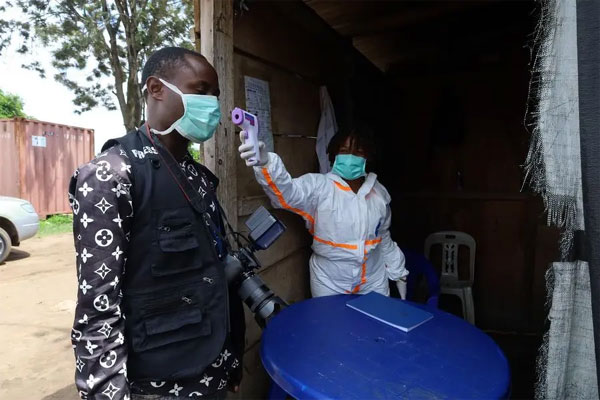
The outbreak is centred in Ituri province, a conflict-affected region where nearly five million people are living amid persistent insecurity and displacement. According to Tedros, around one in four residents in the province requires humanitarian assistance, while nearly one in five has been internally displaced due to violence.
In a statement shared on social media platform X, the WHO chief said escalating conflict is forcing civilians, health workers and humanitarian teams to flee affected areas, making it increasingly difficult to carry out contact tracing and identify infected individuals in time for treatment and supportive care.
Tedros also noted that fear, insecurity and mistrust within local communities are creating additional obstacles for health teams trying to control the spread of the disease.
Despite the challenges, WHO and partner humanitarian organisations continue to operate in Ituri, including in remote and high-risk areas where communities are simultaneously battling Ebola and several other infectious diseases.
The WHO chief stressed that providing broader healthcare support beyond Ebola treatment is essential to gaining public trust and strengthening the effectiveness of the response strategy.
Earlier this month, on May 16, Tedros declared that the Ebola outbreak caused by the Bundibugyo virus strain in the DRC and neighbouring Uganda constituted a Public Health Emergency of International Concern. Subsequently, on May 22, the WHO upgraded its national-level risk assessment for the DRC outbreak to “very high,” while maintaining the regional risk level as “high” and the global risk level as “low.”
According to the WHO, Ebola is a severe and often fatal viral disease that affects both humans and primates. The virus is initially transmitted to humans from infected wild animals such as fruit bats, porcupines and non-human primates. Human-to-human transmission occurs through direct contact with blood, bodily fluids or contaminated materials used by infected individuals.
Health experts estimate that the average fatality rate of Ebola outbreaks is around 50 per cent, though past outbreaks have recorded death rates ranging from 25 to 90 per cent depending on the strain and response measures.
The organisation also recalled that Ebola was first identified in 1976 in remote Central African villages located near tropical rainforests. The deadliest outbreak in history occurred in West Africa between 2014 and 2016, when the virus spread rapidly across Guinea, Sierra Leone and Liberia, resulting in more cases and deaths than all previous outbreaks combined.