Daijiworld Media Network - New Delhi
New Delhi, Feb 13: More than 4.76 crore cases are currently pending across courts in India, including over 63.66 lakh matters in High Courts and 92,101 cases before the Supreme Court of India, the union ministry of law and justice informed the Lok Sabha on Friday.
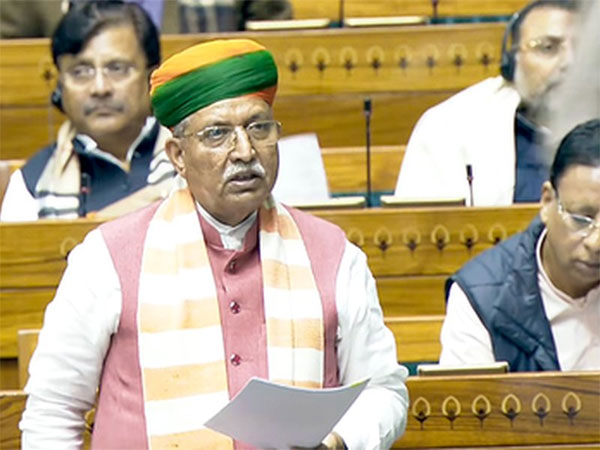
In a written reply to an unstarred question, Minister of State (Independent Charge) for Law and Justice Arjun Ram Meghwal said that, according to data from the National Judicial Data Grid (NJDG), district and subordinate courts accounted for 4,76,57,328 pending cases as of December 31, 2025. Pendency at the Supreme Court stood at 92,101 cases on the same date, reflecting an 11.40 per cent rise over the past three years.
Across the country’s 25 High Courts, 63,66,023 cases were pending as of December 31, 2025 — a 4.75 per cent increase over three years. Among them, the Allahabad High Court reported the highest pendency with 12,07,240 cases, followed by the Bombay High Court with 6,64,979 cases and the Rajasthan High Court with 6,87,595 cases.
The data also showed that pendency in district and subordinate courts has risen by 5.84 per cent over the last three years. State-wise figures indicated that Uttar Pradesh leads with 1,13,45,328 pending cases at the district and subordinate level, followed by Maharashtra with 59,26,999 cases and West Bengal with 38,35,113 cases.
Meghwal noted that disposal of cases falls exclusively within the judiciary’s domain. However, he emphasised that the Centre remains committed to facilitating speedy justice in line with Article 21 of the Constitution. He said the government has undertaken multiple initiatives to support faster case disposal, including improving court infrastructure, expanding computerisation, filling judicial vacancies, and encouraging alternative dispute resolution mechanisms.
The government also highlighted measures such as the National Mission for Justice Delivery and Legal Reforms, the promotion of Lok Adalats, amendments to commercial and criminal laws, and the implementation of the eCourts project as key steps aimed at reducing pendency and enhancing case management efficiency across all tiers of the judicial system.