Daijiworld Media Network - Panaji
Panaji, Jan 20: A symposium titled ‘Architectural Expressions of Goanness and the Goan Hindu Temples’ will be held in Panaji on January 20 at 6 pm. The event is being organised by Fundação Oriente and will bring together scholars and experts to examine Goan identity through the architectural lens of Hindu temples, engaging with both historical and contemporary perspectives.
The symposium aims to initiate critical discussion on the cultural and architectural significance of Goan Hindu temples as important markers of Goan identity, while also opening new avenues for research, documentation and preservation.
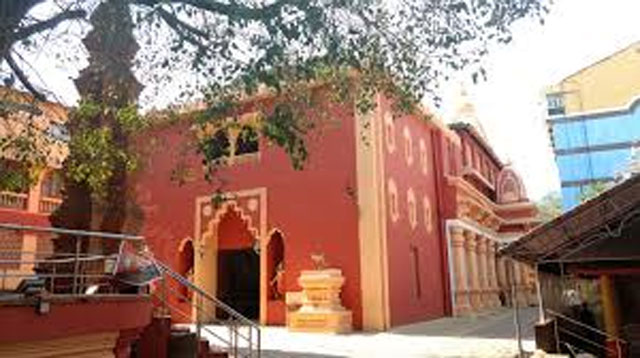
Speaking on Goa’s architectural heritage, Joaquim Manuel Rodrigues dos Santos, who has extensively studied Goa’s architecture and the Portuguese presence in India, said the uniqueness of Goa’s built heritage sets it apart from both Portugal and the rest of India. Citing art historian Paulo Varela Gomes, Santos said Goan architecture possesses an identity of its own — a legacy that Goans should take pride in and actively preserve. He noted that Portuguese influence has resulted in a rich collection of structures in Goa, ranging from fortifications to civil and religious architecture.
Santos pointed out that research on Goa’s architectural heritage has largely focused on fortifications, civil architecture and Catholic religious structures, with few exceptions such as architect Amita Kanekar. He observed that Hindu architectural heritage in Goa has often been overlooked or underrepresented.
“This is deeply unfair, as Goan Hindu temples form a fascinating heritage that deserves serious study and wider dissemination,” he said.
During his fieldwork in Goa, Santos said he was struck by the distinctiveness of Hindu temples in the state. However, a comparison of old photographs revealed that many temples and their surroundings have undergone extensive renovations, significantly altering their original architectural character.
Architect Hélder Carita of Nova University, Lisbon, along with anthropologists Rosa Perez and Pedro Pombo, has also been researching Goan Hindu temples for several years. Santos said the team plans to undertake 3D scanning of some of the best-preserved temples with the support of architect Victor Ferreira from the University of Lisbon.
“The project is still in its early stages, and we are working with hypotheses that we hope to verify over the next two years,” he added.
According to Santos, Portuguese influence is clearly visible in several architectural elements of Goan Hindu temples, including dome-shaped shikaras, exterior pilasters, basilica-style floor plans, arches supported by Tuscan columns, triglyphs, Portuguese-style eaves, scissor roofs with ceramic tiles, and balcony-like porches.
He said Goan Hindu temples represent a palimpsest of history, reflecting layers of cultural influences that make them unique globally. “These temples are deeply interconnected with their communities. They are not just places of worship, but powerful expressions of identity,” he noted.
Santos also highlighted concerns regarding increasing disputes over temple ownership and renovations that erode architectural authenticity, leading to the loss of cultural value.
Santos observed that Goa’s Hindu temple architecture emerged from a rich process of cultural hybridisation involving local traditions, European, Bijapuri and Marathi influences. However, many of these distinctive features are now disappearing.
He attributed this to renovations that import architectural aesthetics from other parts of India, overshadowing the unique Goan style, or to excessive attempts to “recreate” Goanness, which risk turning temples into caricatures of their heritage.
“These are perceptions that need systematic verification, which we hope to address through this project,” Santos said. Cultural heritage experts Prof Adam Hardy and Prof Vítor Serrão will provide academic guidance to the initiative.
Architect Vishvesh Kandolkar, professor at the Goa College of Architecture, will also address the symposium.