Daijiworld Media Network – New Delhi
New Delhi, Nov 26: The Reserve Bank of India (RBI) has brought back a major portion of the country's gold reserves held overseas, with 84% of the total gold stock now stored domestically. However, gold's share in India's overall foreign exchange reserves declined to 14.38% at the end of September 2026 from 16.7% six months earlier, according to the RBI's latest half-yearly report.
India's gold reserves stood at 880.52 metric tonnes at the end of September. Of this, 740.13 metric tonnes were held within the country, while the remaining 140.39 metric tonnes were kept with the Bank of England and the Bank for International Settlements (BIS).
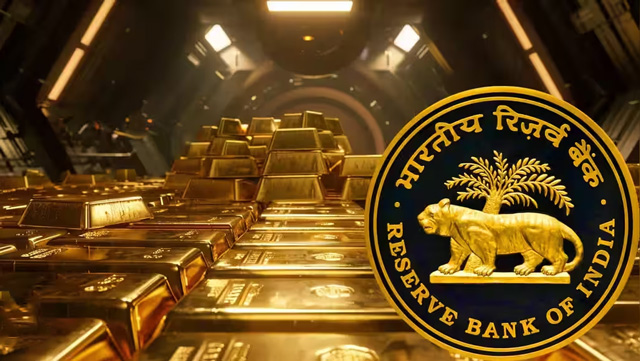
The RBI repatriated around 60 tonnes of gold between April and September 2026, continuing its efforts to bring back overseas holdings amid rising geopolitical uncertainties. In March, 77% of India's gold reserves were held domestically.
The country's foreign exchange reserves increased by $46.67 billion during April-September, rising from $691.11 billion at the end of March to $737.78 billion at the end of September. The reserves stood at $705.3 billion according to the latest data cited in the report.
Of the $608.26 billion in foreign currency assets held at the end of September, $529.57 billion was invested in securities issued by overseas governments. Another $35.95 billion was held as deposits with other central banks and the BIS, while $42.75 billion was deposited with commercial banks abroad.
The RBI said a small portion of the reserves was being managed by external asset managers to explore new strategies and products and diversify the portfolio.
The report noted that the period was marked by heightened geopolitical uncertainty, disruptions to energy supplies and tighter monetary policies adopted by major central banks. Global gold prices declined by around 9%, with the average price falling from $4,721 per troy ounce in April to $4,319 in September 2026.
The RBI attributed the fall in gold prices to rising US Treasury yields, a stronger US dollar and expectations of tighter monetary policy, despite continued investor demand for gold as a safe-haven asset and for portfolio diversification.
The report also highlighted changes in the composition of global foreign exchange reserves. The US dollar's share declined from 57.18% in the first quarter of 2026 to 56.70% in the second quarter, while the euro's share increased from 20.04% to 20.60%.
The RBI reiterated that the safety and liquidity of India's foreign exchange reserves remain its primary considerations, with returns optimised within these parameters.