Daijiworld Media Network - New Delhi
New Delhi, Nov 25: Bangladesh's measles outbreak has reached alarming proportions, with the combined number of confirmed and suspected deaths rising to 1,361 in 2026. Nine more children died in the 24 hours leading up to Tuesday morning, while the country reported over 2.59 lakh suspected cases, according to the Directorate General of Health Services (DGHS).
The outbreak has raised concerns in neighbouring India, which shares a long land border with Bangladesh. The World Health Organization (WHO) has warned of considerable risks of cross-border transmission due to population movement and gaps in vaccination coverage.
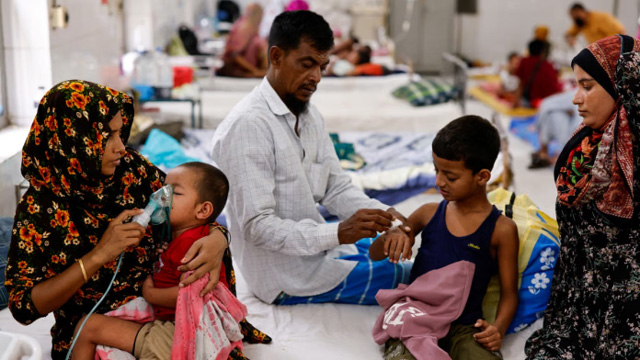
However, this does not indicate an immediate nationwide outbreak in India. Health experts have stressed the importance of maintaining high immunisation coverage and strengthening disease surveillance.
According to DGHS figures reported by Bangladeshi media, the total number of confirmed and suspected deaths includes 105 confirmed deaths and 1,256 suspected deaths. The authorities recorded 1,283 new suspected cases in the 24 hours leading up to Tuesday morning, taking the cumulative number to 2,59,190. Confirmed cases increased by 68 to reach 26,300.
The WHO, in its April 23 outbreak update, identified immunity gaps and interruptions in vaccination as major factors behind the spread. Bangladesh experienced nationwide stockouts of measles-rubella vaccines during 2024-2025. Gaps in routine immunisation and the absence of regular nationwide supplementary vaccination campaigns since 2020 further increased the number of children vulnerable to infection.
A substantial proportion of cases involved children who were either unvaccinated or had received only one dose of the measles-containing vaccine. Some infants were infected before reaching the eligible age for routine vaccination.
The WHO classified the national risk in Bangladesh as high due to sustained transmission across multiple divisions, a large number of susceptible children and reported deaths.
Former Bangladesh Prime Minister Sheikh Hasina had earlier blamed what she described as state negligence and the breakdown of the immunisation system for the outbreak. She alleged that the former Muhammad Yunus-led interim administration disrupted vaccine procurement through political and administrative decisions, claiming that measles-rubella vaccine stocks were exhausted in March 2026.
Hasina also criticised the current BNP government led by Prime Minister Tarique Rahman, alleging that adequate action was not taken after the severity of the outbreak became evident.
The geographical proximity between India and Bangladesh has made the outbreak a regional public health concern. The WHO has warned that cross-border population movement could facilitate the spread of measles. It identified major urban centres such as Dhaka, Chattogram, Sylhet and Cox's Bazar as important travel and transit hubs.
Busy land crossings near Bangladeshi outbreak hotspots, including Jashore and Chapainawabganj, have also been identified as potential routes for cross-border transmission.
The WHO assessed the risk of cross-border spread as considerable and the regional risk as high. It also noted an increase in measles cases in India over the preceding six months.
However, India has relatively high reported measles vaccination coverage. According to the WHO-UNICEF immunisation data portal, India's coverage for the first dose of the measles-containing vaccine stood at 98 per cent in 2025, while the second-dose coverage was 95 per cent.
Despite these encouraging national figures, localised vaccination gaps could leave certain communities vulnerable, particularly children who have missed one or both doses. The US Centers for Disease Control and Prevention (CDC) has also warned that measles can easily cross international borders and trigger outbreaks in communities with low vaccination coverage.
Measles is a highly contagious viral disease that spreads through the air and respiratory droplets when an infected person coughs or sneezes. Symptoms generally appear around 10 to 14 days after exposure and include high fever, cough, runny nose and red or watery eyes.
Small white spots may develop inside the mouth, followed by a rash that usually begins on the face or head before spreading across the body. An infected person can transmit the virus from four days before the rash appears until four days afterwards.
The outbreak highlights the importance of timely vaccination, disease surveillance and identifying communities with inadequate immunisation. Ensuring that children receive both recommended doses remains crucial to preventing further transmission.
For now, the WHO's assessment indicates a considerable risk of cross-border spread rather than confirmation of a direct outbreak spillover into India.