Daijiworld Media Network - Washington
Washington, Nov 17: A US federal court has struck down a Trump administration rule seeking to impose fixed time limits on the stay of foreign students, researchers, scholars and journalists in the country, ruling that the proposed restrictions exceeded the government's legal authority.
US District Judge F Dennis Saylor of Boston issued the ruling on Monday, November 16, describing the Department of Homeland Security (DHS) policy as "arbitrary, capricious, an abuse of discretion, and otherwise not in accordance with law".
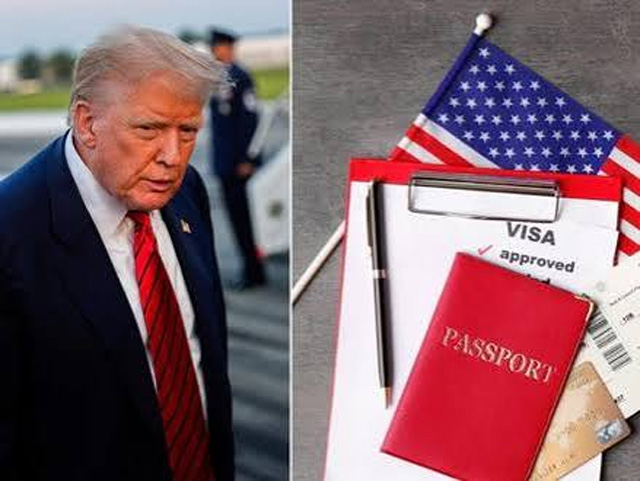
The judgment sets aside the DHS rule in its entirety under the Administrative Procedure Act, preserving the longstanding Duration of Status (D/S) framework that allows eligible international students and exchange visitors to remain in the US for the duration of their academic programmes, provided they maintain their visa status.
The DHS had published the proposed changes in July, seeking to replace the existing system with fixed periods of admission and a new procedure requiring foreign nationals to obtain extensions to continue their stay.
Under the proposal, international students holding F-1 visas would generally have been restricted to a maximum stay of four years. Students requiring additional time to complete their courses would have needed federal approval to extend their stay.
The proposal also covered exchange visitors, including researchers, professors and instructors holding J-1 visas, as well as foreign journalists holding I visas.
For foreign journalists, the proposed rule sought to limit their stay to 240 days, while Chinese journalists would have been restricted to 90 days.
It also proposed reducing the grace period available to international students after completing their studies or post-completion Optional Practical Training (OPT) from 60 days to 30 days. For students enrolled in language programmes, the proposal prescribed an aggregate stay limit of 24 months, including breaks and vacations.
Explaining his decision, Judge Saylor said the DHS was attempting to discourage activities that Congress had intended to permit and encourage through the country's student visa programme.
"Put bluntly, DHS is seeking to prevent or discourage the very activity - providing educational opportunities for foreign students in the United States - that Congress sought to permit and encourage," the judge observed.
"The statute simply does not grant DHS such broad and open-ended authority to undermine the F-1 visa programme," he added.
The court also found that the department had failed to adequately justify the proposed restrictions or demonstrate that the changes were necessary to address immigration fraud and national security concerns. It noted that existing monitoring mechanisms could be used to address such concerns without imposing sweeping restrictions on international students.
The judgment followed a legal challenge filed by a coalition of higher education organisations, universities and labour groups, including NAFSA: Association of International Educators, the Presidents' Alliance on Higher Education and Immigration, the American Federation of Teachers and The NewsGuild-CWA.
The Foundation for India and Indian Diaspora Studies (FIIDS) welcomed the ruling, saying it would protect opportunities for international students and support America's academic and research ecosystem.
"Once again, the court has come to the rescue of international students - and, in doing so, has helped protect the future of American science, technology, research, and innovation," said Khanderao Kand, president and chief of policy and strategy at FIIDS.
Miriam Feldblum, president and CEO of the Presidents' Alliance on Higher Education and Immigration, described the decision as a significant victory for international students, scholars and educational institutions.
She said the administration's policy actions had already contributed to a decline in international student enrolment and interest in studying in the United States.
Fanta Aw, executive director and CEO of NAFSA, said the ruling reaffirmed the continuation of the longstanding Duration of Status policy.
"The judge has sent an unequivocal and resounding message: the longstanding Duration of Status policy is retained," Aw said.
The legal battle began after the DHS moved to end the decades-old Duration of Status system. In September, Judge Saylor had issued a nationwide preliminary injunction preventing the proposed rule from taking effect while the legal challenge continued.
The federal government subsequently appealed that order before the US Court of Appeals for the First Circuit. On November 13, the appeals court granted the government's request to pause consideration of the appeal for 30 days, allowing the district court to proceed with its final judgment.
With the November 16 ruling, the district court has now vacated the DHS rule in its entirety. The government may separately appeal the final judgment, and the existing Duration of Status framework will remain in place unless the decision is stayed or overturned.
The ruling is particularly significant for thousands of international students, including those from India, who pursue undergraduate, postgraduate and doctoral programmes in the United States.