Daijiworld Media Network - New Delhi
New Delhi, Sep 28: The Supreme Court on Monday took suo motu cognisance of recent incidents of sexual assault involving minors and women in the National Capital Region (NCR) and sought a response from the Delhi Police, observing that public spaces such as parks, roads and buses cannot become “zones of high risk”.
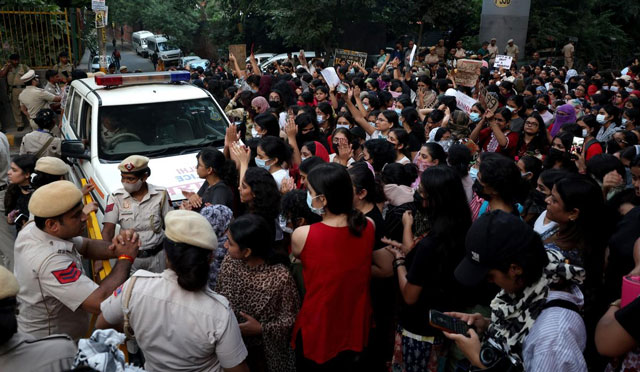
A bench of Justices JB Pardiwala and K Vinod Chandran took note of reports concerning the alleged rape of a 17-year-old girl at Aastha Kunj Park near Lady Shri Ram College, the alleged gang rape of a minor in Swaroop Nagar and the alleged sexual assault of another minor inside a bus travelling from Greater Noida to Delhi.
The bench expressed serious concern over the repeated incidents and referred to the 2012 Nirbhaya case while questioning whether sufficient lessons had been learnt.
“One cannot help but draw a painful parallel to the 2012 Nirbhaya case and wonder whether lessons have been learnt,” the bench said.
The court observed that incidents of sexual assault continue to be reported across the NCR despite the expectation of public safety and emphasised that the right to live with dignity and freedom from violence is protected as a fundamental right under Article 21 of the Constitution.
Noting that the reported incidents occurred in different public spaces, including a park, a road and a bus, the bench said such locations could not be allowed to become high-risk areas because of inadequate patrolling or surveillance.
“Public spaces, including parks, roads, buses, Metro stations, subways, etc cannot be made zones of high risk due to poor patrolling and lack of surveillance,” the court said.
The bench also took note of reports that students of Lady Shri Ram College had previously complained about instances of sexual harassment in the area but that the complaints had not resulted in adequate corrective measures.
It observed that the reported security lapses should have been addressed through improved surveillance and other preventive measures.
The court said statements issued by public authorities and law enforcement agencies following such incidents were understandable, but stressed that the repeated cases raised concerns over the functioning of law enforcement and public administrative authorities in ensuring public safety.
“These incidents starkly underline a systematic failure on the part of the law enforcement and public administrative authorities to guarantee public safety,” the bench said.
“Concern devoid of action is not enough. What is required is measured response and accountability of persons entrusted with law enforcement,” it added.
Recent reporting on the Aastha Kunj incident has also highlighted concerns over inadequate lighting, damaged boundary walls, limited surveillance and security arrangements at the sprawling park.
The Supreme Court's proceedings come amid heightened scrutiny of safety arrangements in public spaces across Delhi following the reported incidents.