Daijiworld Media Network - New Delhi
New Delhi, Sep 19: India's counter-terrorism operations have undergone a strategic shift from a largely reactive approach to a pre-emptive, intelligence-driven doctrine aimed at identifying and dismantling terror modules before they can execute attacks, according to senior security officials.
The shift is in line with the National Counter-Terrorism Policy and Strategy, PRAHAAR, introduced by the Ministry of Home Affairs on February 23, 2026. The policy describes an intelligence-led proactive framework focused on preventing terror attacks, swift response, inter-agency coordination and countering radicalisation.
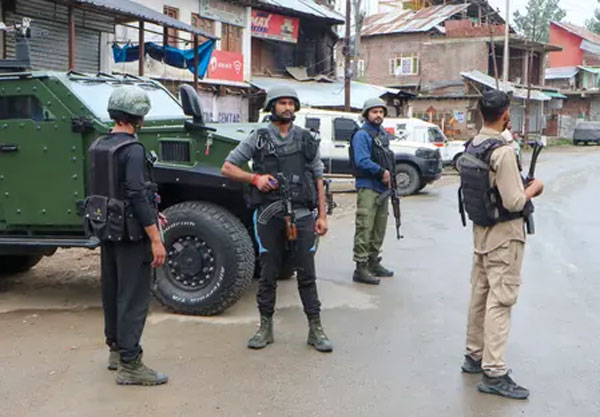
Since coming to power, the Narendra Modi government has maintained a stated policy of zero tolerance towards terrorism. Officials said the latest approach places greater emphasis on identifying and neutralising threats before they materialise rather than waiting for an attack and responding afterwards.
An official said recent developments indicated that PRAHAAR was already beginning to influence the functioning of security agencies.
“The clear directive to the agencies is not to wait for an incident to take place and then react to the same,” the official said.
“The focus is on preventing terror attacks and ensuring that terror modules do not grow to such an extent that bringing them under control becomes a Herculean task,” the official added.
An Intelligence Bureau official said a similar approach was being followed across the country, particularly in Jammu and Kashmir.
The official alleged that Pakistan's Inter-Services Intelligence (ISI) had been attempting to activate its overground worker (OWG) network and facilitate infiltration into the Valley. However, the official said these efforts had met with limited success because agencies were focusing on disrupting plans before attacks could be carried out.
“In the past couple of months, security agencies in Jammu and Kashmir have neutralised terrorists, busted multiple modules and ensured that the overground worker network remains grounded,” the IB official said.
The official added that these remained among the major challenges in Jammu and Kashmir and that security agencies had made it harder for terror networks to plan and execute attacks.
Another official said radicalisation was an even broader challenge, with cases not confined to any particular region.
According to the official, radicalisation modules, though not necessarily connected to one another, had been detected in states including Maharashtra, Andhra Pradesh, Telangana, Bihar, Delhi, Rajasthan, West Bengal and Kerala.
The official said the Islamic State had particularly focused on radicalisation and online or ideological influence among young people. Security agencies, after assessing the scale of the threat, moved to disrupt such modules, the official added.
The busting of a pan-India radicalisation module in Andhra Pradesh was cited as an example. Officials said the module had the potential to expand significantly but was disrupted before it could develop further.
“If intelligence is actionable, the agencies move immediately to disrupt the module and prevent it from developing further,” officials said.
A similar operation was reported in Gujarat, where security agencies busted a self-styled module linked ideologically to Jaish-e-Mohammad. Officials said extremist material was recovered during the operation and that the module was disrupted before it could pose a larger threat.
Officials also pointed to action against attempts by Bangladesh-based groups to establish networks in India. Multiple attempts allegedly involving Harkat-ul-Jihadi Islami (HuJI) and Jamaat-ul-Mujahideen Bangladesh (JMB) have been thwarted, they said, with West Bengal and northeastern states among the areas being targeted.
The officials described this as an important shift in India's counter-terrorism and anti-radicalisation strategy.
Under PRAHAAR, the government has formally emphasised prevention, intelligence sharing and a coordinated “whole-of-government” approach, alongside human rights and rule-of-law based processes.
Officials said the strategy was also intended to ensure closer integration between intelligence agencies, state police forces and central agencies, allowing actionable intelligence to be shared and acted upon more quickly.
The Ministry of Home Affairs has said the policy is being implemented progressively and is intended to strengthen coordination between state agencies and specialised central forces while addressing both terrorism and the conditions conducive to radicalisation.