Steephan Kayyar
Daijiworld Media Network - Kasargod
Kasargod, Sep 2: Climate change and El Niño are posing serious challenges to the coconut and plantation crop sector, making research, technological innovation and collaboration essential to strengthen the resilience of farmers, said Dr K B Hebbar, director of ICAR–Central Plantation Crops Research Institute (CPCRI), Kasaragod.
He was speaking at the World Coconut Day 2026 celebrations held at ICAR–CPCRI, Kasaragod, on Wednesday. The programme was organised on the theme, “Coconuts in Times of Uncertainty: Securing Food, Energy, and Livelihoods.”
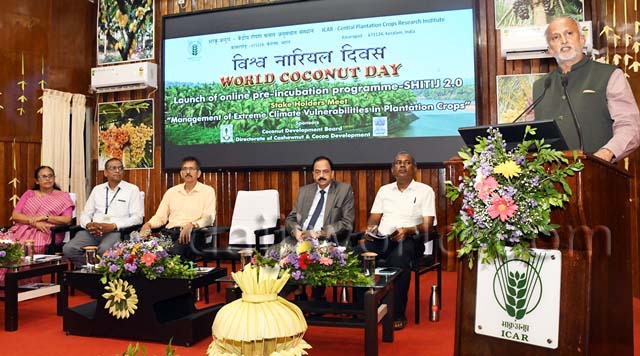
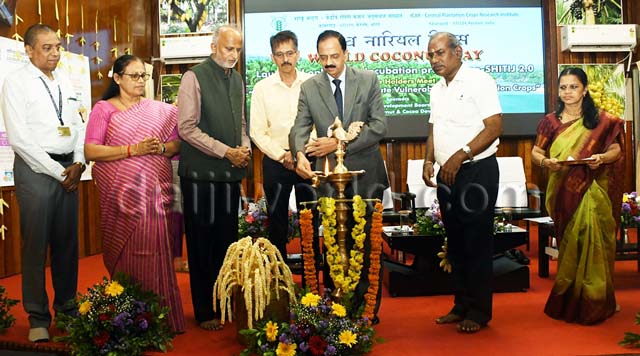
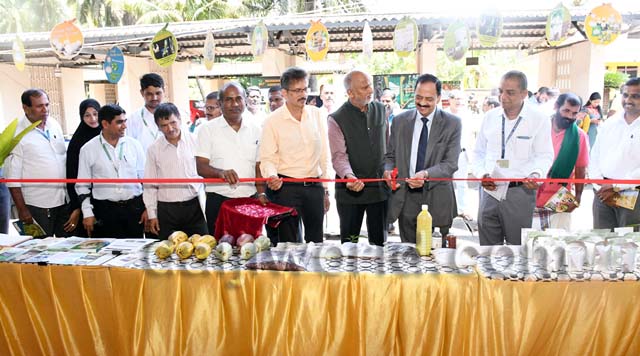
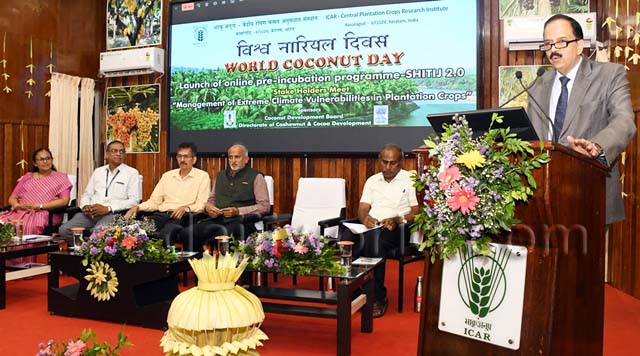
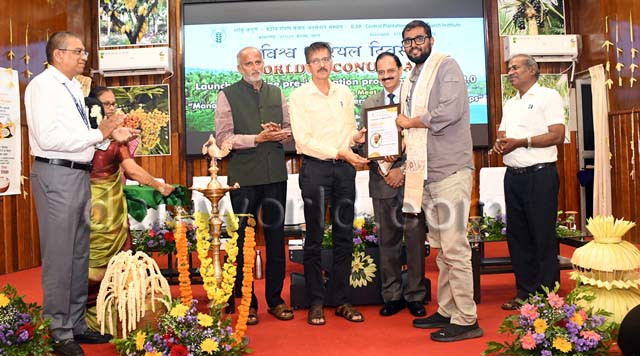
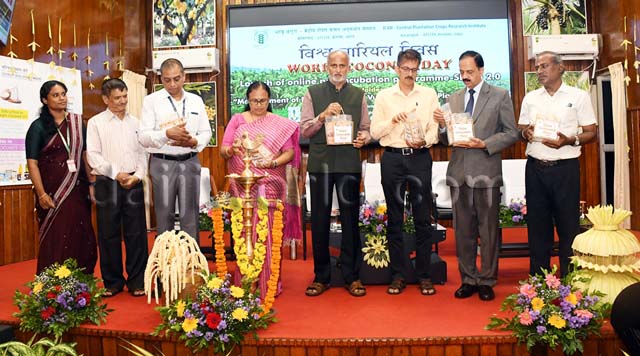
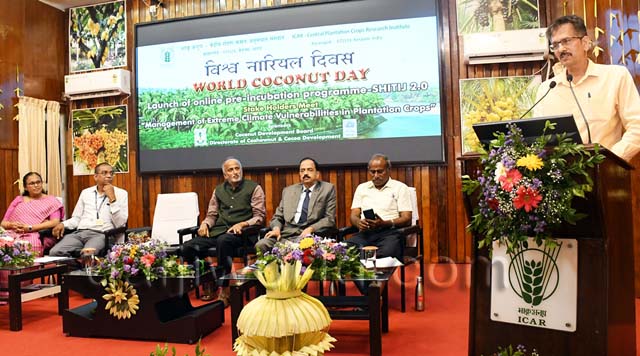
The major highlight of the event was the launch of SHITIJ 2.0, an online entrepreneurial development and pre-incubation programme aimed at helping aspiring entrepreneurs, startups and innovators transform ideas and technologies into viable products and enterprises. A stakeholders’ meet on “Management of Extreme Climate Vulnerability in Plantation Crops” was also inaugurated.
Dr Hebbar, who presided over the programme, said climate change was creating new challenges in plantation crops, with pests and diseases emerging as secondary problems. He highlighted CPCRI’s work in developing improved varieties and technologies and said the demand for quality planting material was being addressed by licensing varieties to nursery entrepreneurs.
He stressed the importance of collaboration with ICAR institutes and other organisations to address emerging challenges. He also highlighted CPCRI’s achievements in variety improvement and technology development and discussed the impact of El Niño on plantation crops.
SHITIJ 2.0 to strengthen agri-startup ecosystem
Dr K Ponnusamy, head of Social Science at ICAR–CPCRI, introduced SHITIJ 2.0. Around 400 participants have registered for the programme, which connects the CPCRI hub with six associated institutes working in vegetable and fruit value chains.
The programme will focus on developing a roadmap for SHITIJ 2.0 and strengthening the agricultural startup ecosystem across seven thematic areas.
Prof Dr B Satheesh Kumar Bhandary, former vice-chancellor and vice-president (ISR & CRL), NITTE (DU), formally launched the online pre-incubation programme. He praised CPCRI’s Kalpa Vruksha initiative and its new technologies, describing SHITIJ 2.0 as a platform to transform ideas into innovations, products and enterprises.
He also highlighted the income potential of value-added coconut technologies and stressed that collaboration would be crucial for the success of agricultural enterprises.
Best farmers and entrepreneurs honoured
Two outstanding farmers from each participating state were honoured during the programme.
From Tamil Nadu, J Kennady of Arasampatti and S Muhammed Ismail of Tenkasi were honoured. From Karnataka, Rudresh H A of Chitradurga and P N Nataraju of Tumakuru received the honour. From Kerala, Hari Varadharaj G of Palakkad and Kadeeja Kadher P were honoured. Yeragundi Laksmaiah and Baburaj were honoured from Andhra Pradesh.
The two successful entrepreneurs honoured were Sreelatha T K of Kasaragod and Abdul Gafoor of Malappuram.
MoUs signed for technology commercialisation
Technology commercialisation was another major highlight of the programme. CPCRI entered into MoUs with industry and institutional partners for technologies related to virgin coconut oil, coconut chips, flavoured coconut milk, foam-mat dried coconut milk and coconut varieties.
Kalpa Composite Flour, based on CMR products, was also launched. Publications released during the programme included a book on Good Horticultural Practices for Cocoa, the ISPC Newsletter, a leaflet on Balanced Nutrient Management and a Kannada extension folder on EPN for the management of white grubs in arecanut.
CPCRI licensee Radhakrishna of Abhijnana Food Products Ltd., Karnataka, launched a new brand, NITYA. Coconut climbing devices were also distributed to beneficiaries under SCSP and TSP schemes.
Dr J Dinakara Adiga, director of ICAR–DCR, congratulated CPCRI on hosting World Coconut Day at an institution with a 110-year history of research in coconut.
Dr V Niral, head of Crop Improvement, delivered the welcome address, while Dr K Ponnusamy proposed the vote of thanks.
The stakeholders’ meet was inaugurated by Dr S Senthil Vinayagam, director, Indian Institute of Plantation Management, Bengaluru. The meeting focused on strategies to manage extreme climate vulnerabilities in plantation crops, with sessions continuing until September 3.