Daijiworld Media Network - London
London, Aug 25: Rectal spacers achieved comparable separation between the prostate and rectum and demonstrated an acceptable short-term safety profile in patients with cT3 prostate cancer undergoing external beam radiotherapy, according to findings from a prospective cohort study.
Biodegradable rectal spacers are widely used in localised prostate cancer to increase the distance between the prostate and rectum, thereby reducing unintended radiation exposure to the rectum. However, evidence regarding their use in locally advanced disease has remained limited.
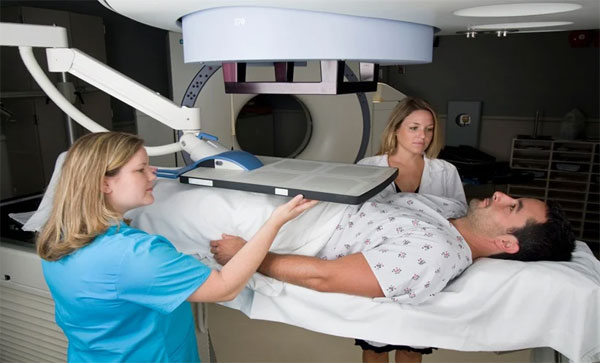
Spacers show comparable separation in cT3 disease
Researchers conducted a prospective single-centre study between 2022 and 2024 involving 181 men with biopsy-confirmed cT1 to cT3 prostate cancer who were scheduled to undergo external beam radiotherapy.
All participants underwent insertion of either a polyethylene glycol hydrogel spacer or a hyaluronic acid spacer before radiotherapy.
Of the 181 patients, 62 had cT3 disease, while 119 had cT1c or cT2 disease. Post-insertion rectal spacing was broadly comparable between the two groups.
At the mid-gland, the mean separation was 1.00 cm ± 0.36 in the cT3 group compared with 1.05 cm ± 0.37 in the cT1c/cT2 group. At the apex, spacing measured 0.52 cm ± 0.27 and 0.59 cm ± 0.30, respectively.
A significantly greater separation at the base was recorded among patients with cT3 disease, at 0.94 cm ± 0.32 compared with 0.82 cm ± 0.30 in the cT1c/cT2 group.
Low rates of significant toxicity
Researchers found no significant differences in gastrointestinal toxicity between the disease stages.
Acute grade 1 or 2 gastrointestinal toxicity occurred in 12.9 per cent of patients with cT3 disease, compared with 5.0 per cent of those with cT1c/cT2 disease.
Late toxicity was reported in 4.3 per cent of the cT3 group and 1.1 per cent of the cT1c/cT2 group. Importantly, no patient in either group experienced grade 3 or higher toxicity.
Procedure-related complications were also uncommon. Temporary urinary retention requiring catheterisation occurred in 17.7 per cent of patients with cT3 disease and 13.4 per cent of those with cT1c/cT2 disease.
No patients developed refractory urinary retention, infective complications or rectal mucosal injury.
Potential role in locally advanced disease
Patients with cT3 disease were more likely to receive higher-dose radiotherapy regimens, yet their toxicity outcomes remained broadly comparable with those of patients with earlier-stage disease.
The researchers suggested that the findings may indicate that rectal spacers retain their protective effect across different treatment intensities and disease stages.
Early oncological outcomes were also encouraging. Freedom from biochemical failure was 98.1 per cent in the cT3 group and 100 per cent in the cT1c/cT2 group during a median follow-up of eight months.
However, the researchers emphasised that longer follow-up is needed to determine long-term cancer control and late toxicity outcomes.
Overall, the findings suggest that rectal spacers may have an increasingly important role in supporting safer and more precise external beam radiotherapy for patients with locally advanced prostate cancer, although longer-term evidence is needed to establish their benefits fully.