Daijiworld Media Network - New Delhi
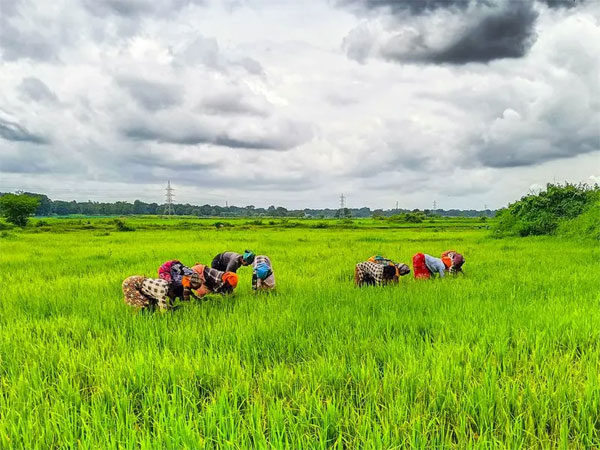
New Delhi, Aug 23: As India steps up its push for regenerative agriculture, farmers across the country are increasingly adopting practices such as natural farming, agroforestry, micro-irrigation, integrated farming systems and scientific soil management.
According to an official factsheet, government support has accelerated the transition towards farming practices aimed at restoring soil vitality, strengthening ecosystem functions, improving resilience to climate variability and promoting long-term environmental and farm prosperity.
As of March 2026, natural farming clusters covered 8.80 lakh hectares and enrolled 18.19 lakh farmers. Around 109 lakh hectares have been brought under the Per Drop More Crop scheme, while 25.89 crore Soil Health Cards have been generated since the programme's inception.
India's agriculture and allied sectors have also maintained strong growth. During FY16-FY25, the sector recorded a decadal growth rate of 4.45 per cent, the highest among previous decades.
However, years of intensive cultivation, heavy chemical use and erratic rainfall have left several agricultural soils depleted and less responsive. Crops that once produced good yields with fewer inputs increasingly require higher investments, while heatwaves, prolonged dry spells and excessive rainfall can wipe out months of farmers' efforts.
For millions of small and marginal farmers, declining soil health translates into rising costs and uncertain harvests. The sustainability of agriculture has therefore become an increasingly important concern, with regenerative agriculture emerging as a key part of the response, the statement said.
What is regenerative agriculture?
Regenerative agriculture is a holistic approach centred on restoring soil health and enhancing biodiversity while ensuring long-term productivity and resilience in farming systems.
Healthy soils can support higher food and nutritional output, store more carbon and promote biodiversity. Unlike sustainable farming, which primarily seeks to maintain existing conditions, regenerative agriculture aims to improve them by actively rebuilding soil health, enhancing biodiversity and strengthening ecosystem resilience.
The approach is based on principles including minimising soil disturbance, protecting living roots of perennial crops, maintaining soil cover, integrating livestock, reducing chemical inputs and enhancing biodiversity.
India's regenerative agriculture landscape draws on a wide range of farming practices.
Micro-irrigation
Micro-irrigation systems such as drippers, sprinklers and foggers deliver water directly to plant roots, reducing wastage and improving water-use efficiency.
Better farm-level water management can enhance crop productivity while improving resilience to drought and water stress, making farming systems more climate-resilient and economically viable.
Farm mechanisation
Farm mechanisation involves the use of agricultural machinery and equipment to streamline and automate farming operations.
It helps optimise the use of key inputs such as water, fuel and fertilisers, thereby reducing wastage and lowering the carbon footprint. Timely and precise farm operations can improve resource management, enhance productivity and reduce agriculture's environmental impact.
Efficient nitrogen management
Nitrogen fertiliser management seeks to improve crop productivity while reducing nitrous oxide emissions and other environmental losses.
The approach includes selecting appropriate fertilisers and optimising the timing and dosage of applications. Other measures include deep placement of supergranular urea and the use of leaf colour charts to assess crop nitrogen requirements more precisely.
It also promotes biological inputs such as cyanobacteria and legume intercropping, helping improve nitrogen-use efficiency while limiting losses to the environment.
Natural farming
Natural farming is a chemical-free agricultural approach rooted in India's traditional knowledge systems.
It relies on biological inputs prepared on the farm, including Beejamrut, Jeevamrut, GhanJeevamrut, Neemastra and Dashparni, using inputs derived from native livestock.
The system also encourages the use of traditional seed varieties and integration of trees along farm boundaries. Pest management is carried out through locally prepared botanical formulations, the statement added.
With soil degradation, climate variability and rising farm-input costs posing growing challenges, regenerative agriculture is being positioned as an approach that can combine environmental restoration with the long-term productivity and prosperity of India's farming communities.