Daijiworld Media Network - Washington
Washington, Aug 11: US President Donald Trump has rejected Iran’s reported demand for compensation over damage caused by US and Israeli strikes during the ongoing conflict, instead demanding that Tehran compensate the United States for deaths and injuries linked to attacks attributed to Iran.
Iran has reportedly sought USD 300 billion in compensation from Washington for war-related damage, along with the release of up to USD 100 billion in frozen Iranian assets. Tehran has linked the demands to any agreement to fully reopen the strategically important Strait of Hormuz. Recent reports have also indicated that Iran wants sanctions lifted and US military threats against it ended as part of the conditions for reopening the waterway.
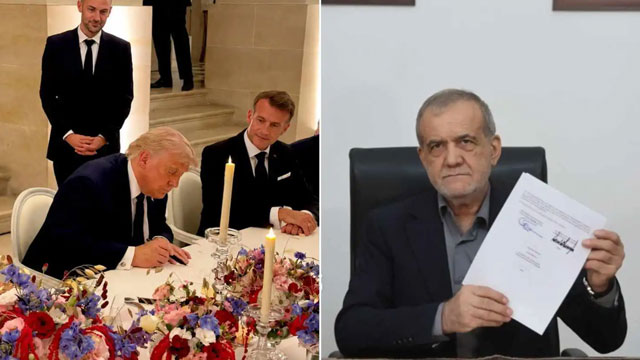
In a post on Truth Social, Trump described Iran’s compensation demand as an “interesting idea” and said he would put forward his own counter-demand in future negotiations.
Trump said Iranian representatives were seeking compensation for damage caused during what he described as the “last five-month military conflict”, which he said began because Tehran refused to give up its nuclear weapons.
Trump said Iran should also compensate the families of people killed or seriously wounded in attacks and conflicts involving Tehran. He specifically referred to the 2000 bombing of the USS Cole and other conflicts, as well as Iranian military commander Qassem Soleimani, who was killed in a US drone strike in Baghdad in 2020.
“I am likewise demanding compensation from Iran, for all of the people that they have killed and gravely wounded,” Trump said.
He also demanded compensation for families of protesters whom he alleged had been killed by the Iranian government over the past five decades.
Trump claimed that 52,000 people had been killed during the five-month conflict but did not provide supporting details for the figure. He said he had instructed US representatives to include his compensation demands in all future negotiations.
The latest exchange has further complicated efforts to reach an agreement between Washington and Tehran, with both sides now publicly setting out financial and political conditions for any broader settlement.
Strait of Hormuz remains key sticking point
The dispute over compensation is closely linked to the reopening of the Strait of Hormuz, one of the world’s most important shipping routes.
Iran has said Washington must agree to compensate it for war damage, lift sanctions, end military threats and release frozen Iranian assets before Tehran agrees to fully reopen the waterway.
The Iranian Revolutionary Guard Corps has said the strait will remain closed until the United States accepts Tehran’s demands. Iran has described the waterway as a “theatre of war” until its conditions are met.
The closure and disruption of shipping through the strait have increased pressure on global energy markets. Oil prices rose sharply as traders assessed the prospects of a US-Iran agreement and the possibility of the waterway being reopened.
Trump has repeatedly said that the Strait of Hormuz remains open, while shipping activity has been severely disrupted by the conflict and the threat of further attacks.
The US president has also threatened Iran with a “massive bombing campaign”, while Iranian officials have indicated that Tehran is prepared for a prolonged confrontation.
Iranian security chief Mohammad Bagher Zolghadr had earlier called for an end to what he described as “war and aggression” against Iran and its allies in Lebanon, Palestine, Yemen and Iraq.
The latest dispute over compensation comes as Washington and Tehran remain far apart on the terms needed to end hostilities and restore normal shipping through the Strait of Hormuz.