Daijiworld Media Network - San Juan
San Juan, Aug 8: Puerto Rico is facing an intensifying water crisis as a severe drought, record-breaking heat and long-standing problems with the island's ageing water infrastructure leave tens of thousands of residents struggling without reliable access to water.
The crisis has prompted the government to impose strict water rationing in San Juan and several surrounding municipalities. More than 180,000 customers are set to go without running water for 48 hours at a time under a rotating schedule that began Friday. The rationing is expected to continue at least through the end of August, although officials have warned that its duration could be extended depending on rainfall and reservoir conditions.
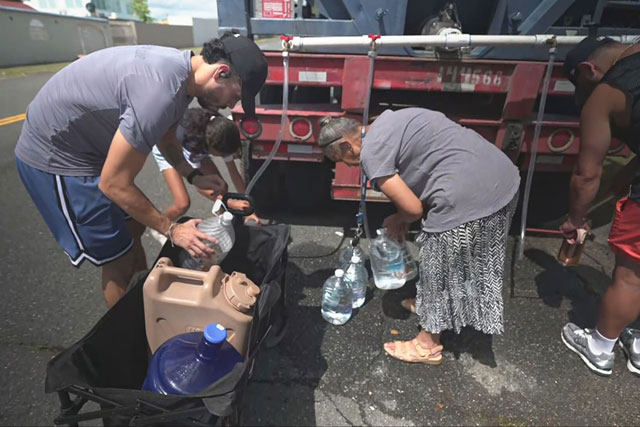
For some residents, however, the latest restrictions are an escalation of a problem they have already been living with for months. Communities affected by chronic supply interruptions say they have sometimes gone for days without water and have been forced to search for alternative supplies. Water trucks have become a crucial lifeline, with residents lining up with containers to collect water when supplies arrive.
The latest restrictions initially affect areas supplied by the critically depleted Carraízo reservoir, including San Juan and parts of Carolina, Juncos, Gurabo, Trujillo Alto, Canóvanas and Loíza. Under the rotating schedule, residents in different zones receive water for a period before supplies are shut off for 48 hours.
The scale of the crisis reflects the severity of the drought. July was the driest month on record in San Juan in more than 120 years and was also among the capital's hottest months. Almost 25% of Puerto Rico is currently experiencing severe drought, while another 36% is under moderate drought conditions, according to the US Drought Monitor.
A US drought assessment issued in July said conditions across Puerto Rico had deteriorated significantly through May, June and July following a wetter-than-normal late winter and early spring. Critically low stream levels, declining reservoir supplies and depleted groundwater have already affected agriculture and communities across the island.
The outlook offers little immediate relief. Forecast models indicate a greater than 70% likelihood of below-normal rainfall and above-normal temperatures across Puerto Rico and the US Virgin Islands from August through October. A strengthening El Niño is expected to reduce the frequency of tropical waves and cyclones, potentially worsening the rainfall deficit and allowing drought conditions to persist or spread.
Puerto Rico's Water and Sewer Authority has said water trucks will be deployed to assist affected communities, with priority given to essential facilities such as hospitals and centres caring for elderly people. Officials have also urged residents to conserve water whenever supplies are available and to avoid non-essential uses. People have been advised to boil water for safety once service resumes.
The drought is aggravating an already fragile water system. Several communities had been experiencing prolonged water shortages even before the current drought intensified. In some areas, residents have reported recurring interruptions lasting months, highlighting the impact of ageing infrastructure, maintenance problems and limited investment.
The island's water authority has faced mounting criticism over the reliability and management of the system. San Juan's mayor previously sued the authority over water outages, while lawmakers and other officials have demanded greater transparency and a clearer plan to address the crisis. Governor Jenniffer González has acknowledged that Puerto Rico's water infrastructure has suffered from years of underinvestment and neglect.
The government has also turned to emergency measures. Earlier in the crisis, the National Guard was activated to help with water distribution, while emergency water trucks were deployed to communities affected by severe shortages. The situation has placed additional pressure on households, particularly elderly, disabled and economically vulnerable residents who may find it difficult to collect and store water themselves.
The drought is also hurting Puerto Rico's agricultural sector. The July drought assessment reported falling reservoir levels across southern irrigation systems, with agricultural water rationing already in effect in several districts. In the southwest, farmers have faced particularly severe restrictions, while some streams have been flowing at only a fraction of their normal levels. Coffee growers have reported premature ripening that could affect quality, while ranchers have faced shortages of forage and increased dependence on supplementary feed.
For residents, the crisis has become a daily struggle involving queues for water trucks, storing whatever water they can obtain and adjusting basic household routines around unpredictable supplies.
The present emergency is not without precedent. Puerto Rico experienced major water-rationing crises in 2015 and 2020, but the current combination of severe drought and chronic infrastructure weaknesses has renewed concerns about the island's ability to provide a dependable water supply.
Officials have warned that there is no quick solution. With forecasts pointing to continued heat and below-normal rainfall, the authorities face the difficult task of balancing dwindling reservoir supplies with the needs of households, hospitals, businesses and agriculture.
For many Puerto Ricans, the water trucks arriving on neighbourhood streets have therefore become more than an emergency response. They are increasingly the most visible sign of a crisis in which a basic necessity is no longer guaranteed by the tap.