Daijiworld Media Network - Los Angeles
Los Angeles, Jul 12: A fast-moving wildfire in Southern California has expanded to nearly 2,700 acres (about 10.9 sq km), prompting evacuation orders as firefighters battle the flames under extreme heat conditions.
The Summit Fire broke out around 1 p.m. local time on Friday in Llano, a community located near the border of Los Angeles and San Bernardino counties. According to the California Department of Forestry and Fire Protection (CAL FIRE), the blaze remained 0 per cent contained as of Saturday morning.
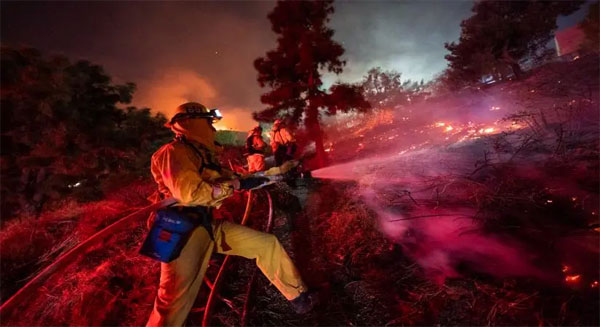
Authorities have issued evacuation orders and warnings for residents in nearby areas as firefighting teams continue operations from the ground and the air. Officials said rugged terrain has made access difficult, while helicopters are assisting crews by carrying out aerial water drops.
The wildfire erupted as temperatures in the region soared to nearly 100 degrees Fahrenheit (37.8 degrees Celsius) on Friday. A heat advisory remains in force across much of Southern California until Tuesday morning.
The latest blaze comes after several other wildfires continued to burn across Riverside, Kern and San Diego counties in June. Fire officials have cautioned that hotter, drier weather is expected to increase wildfire activity across California in the coming months.
Reflecting the changing climate, CAL FIRE officials have moved away from using the traditional term "fire season," saying wildfire threats now persist throughout much of the year.
David Acuna, a battalion chief with CAL FIRE, said the agency now prefers the term "peak fire year" to better reflect the state's evolving wildfire pattern.
According to CAL FIRE, 2,584 wildfires have scorched more than 79,690 acres across California so far this year, destroying 25 structures. No deaths have been reported.
Fire authorities attributed the growing wildfire threat to prolonged drought, rising temperatures and increasingly dry vegetation. They also noted that dense plant growth from previous wet years has become highly combustible as it dries out under persistent heat, increasing the intensity and spread of wildfires.