Daijiworld Media Network – New Delhi
New Delhi, Feb 25: India could consider a “calibrated” and “step-by-step” easing of investment norms for proposals originating from China, Union Commerce and Industry Minister Piyush Goyal said on Tuesday, signalling a possible shift in approach while maintaining caution.
Speaking at Business Standard’s annual ‘Manthan 2026’ event, Goyal clarified that foreign direct investment (FDI) from China is not banned, but currently routed through the government approval mechanism.
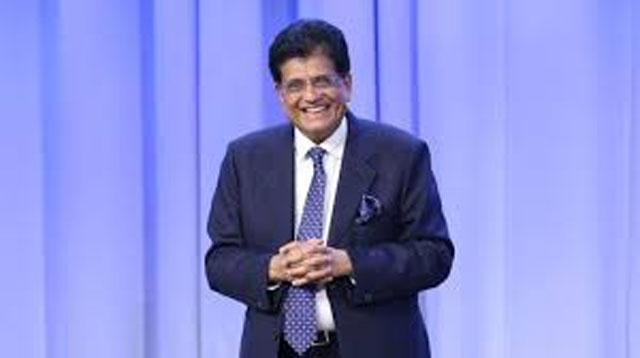
“FDI from China is not prohibited. It goes through an approval process, and at present, our effort is to accelerate approvals,” the minister said, adding that the government would take decisions in consultation with industry stakeholders.
He described the Centre as a “listening government”, stating that policies would evolve based on economic requirements and national interest. “It may be a calibrated response. It may be step-by-step. We are in dialogue with industry to understand their concerns and see how we can make it easier for technology partnerships and value-chain integration,” he noted.
Under the revised FDI norms introduced in April 2020 — widely known as Press Note 3 — investments from countries sharing a land border with India, including China, require prior government approval. The move was aimed at preventing opportunistic takeovers of Indian firms during the economic stress caused by the Covid-19 pandemic, particularly amid heightened border tensions.
Goyal indicated that while the framework remains, the government is open to reviewing procedures in light of improved bilateral ties and the need for advanced technology inflows.
On free-trade agreements (FTAs), the minister asserted that all trade pacts signed under the present administration safeguard the interests of farmers, fishermen, MSMEs and startups.
Since 2021, India has concluded FTAs with Mauritius, the UAE, Australia, the European Free Trade Association (EFTA), the United Kingdom, Oman and New Zealand, while negotiations with the European Union and the United States are at advanced stages.
Goyal said trade with Australia and the UAE has doubled following implementation of the agreements. The EFTA pact has already come into force, while those with the UK and Oman are expected to be operational soon.
India is also preparing to launch FTA negotiations with the Gulf Cooperation Council (GCC) nations, with an aim to conclude discussions within a year. Talks with Chile are progressing as well, with a focus on securing access to critical minerals.
“I can assure you that every trade deal is in India’s interest. We do not compromise on anything that is not good for the country, while opening up new opportunities for our businesses and entrepreneurs,” he said.
Addressing concerns over quality control orders (QCOs), Goyal clarified that the objective is not to curb imports but to ensure higher product standards for Indian consumers.
He observed that between 2007-08 and 2013-14, sharp reductions in import duties led to a surge in low-cost imports, particularly from China, significantly widening India’s trade deficit.
“Once consumers get accustomed to low-price, low-quality goods, it becomes difficult to shift behaviour. Our effort now is to promote quality manufacturing and protect consumer interests,” he said.
The minister added that the Bureau of Indian Standards (BIS) continues to develop voluntary standards to encourage production of superior-quality goods and services.
The remarks underscore the government’s balancing act between safeguarding domestic industry and strengthening global trade partnerships.