Daijiworld Media Network – New Delhi
New Delhi, Feb 11: Lok Sabha Speaker Om Birla will not preside over the proceedings of the House until the issue related to the notice seeking his removal is settled, citing moral grounds, sources said on Tuesday.
The development comes a day after opposition parties submitted a notice to move a resolution for Birla’s removal, accusing him of denying Leader of the Opposition Rahul Gandhi and other members the opportunity to speak during the Motion of Thanks to the President’s address and for suspending eight MPs.
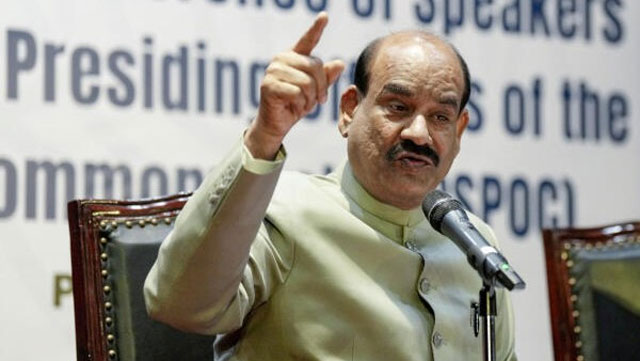
Article 96 of the Constitution bars the Speaker or Deputy Speaker from presiding over House sittings while a resolution for their removal is under consideration. However, the provision allows the Speaker the constitutional right to defend himself in the House when the resolution is taken up for discussion.
Sources said Birla has directed Lok Sabha Secretary General Utpal Kumar Singh to examine the notice submitted by the opposition and take appropriate action in accordance with parliamentary rules.
The notice was submitted by Congress chief whip K Suresh on behalf of several opposition parties, including the Congress, Samajwadi Party and the DMK. It is backed by 106 MPs, crossing the minimum requirement of 100 signatures needed to move such a resolution. The Trinamool Congress neither signed the notice nor attended the INDIA bloc meeting where the decision was taken.
Opposition parties, led by the Congress, decided to move the resolution following a meeting chaired by Congress president Mallikarjun Kharge amid continuing disruptions in Parliament. The move came after talks between Congress MPs and Parliamentary Affairs Minister Kiren Rijiju failed to break the deadlock over Gandhi being denied an opportunity to speak in the House.
Parliament has witnessed repeated disruptions since February 2, with opposition members protesting the Chair’s rulings. These included the disallowing of Gandhi from quoting an article referring to an unpublished memoir by former Army chief M M Naravane on the 2020 India-China border clash. Last week, seven Congress MPs and one CPI(M) member were suspended for the remainder of the session following disorderly scenes in the House.
Meanwhile, opposition parties have agreed to participate in the discussion on the Union Budget later on Tuesday.
Explaining the procedure, former Lok Sabha Secretary General P D T Achary said the notice must be examined at the preliminary stage to determine whether it contains specific and non-defamatory charges, as mandated under the rules. He clarified that the notice has to be submitted to the Secretary General and not to the Deputy Speaker or any other authority.
Under Article 94(c) of the Constitution, the Speaker can be removed by a resolution passed by a simple majority of the effective strength of the House, excluding vacancies. Unlike most motions, all members of the House are counted to compute the majority, not just those present and voting.
As the current Lok Sabha does not have a Deputy Speaker, scrutiny of the language of the resolution may be undertaken by the senior-most member of the panel of chairpersons, which assists the Speaker in conducting proceedings.
Once processed, the resolution can be taken up after a mandatory 14-day period. The House must then grant permission by at least 50 members standing in support. If admitted, the resolution has to be discussed and disposed of within 10 days.
While there have been attempts in the past to remove a Lok Sabha Speaker, none have succeeded so far, largely due to ruling governments enjoying a majority in the House.