Daijiworld Media Network - Washington
Washington, Dec 21: As residents across Washington state assess extensive damage caused by a recent series of powerful storms, state officials have underscored the urgent need for proactive flood mitigation measures, even as several key projects remain stalled due to delays and proposed cuts in federal funding under the Trump administration.
Washington had secured tens of millions of dollars in federal grants aimed at elevating homes, relocating residents from flood-prone zones and constructing new levees to safeguard vulnerable communities. However, many of these initiatives are now in uncertainty.
Earlier this year, the Trump administration attempted to withdraw nearly USD 182 million in Federal Emergency Management Agency (FEMA) funds earmarked for natural hazard mitigation projects in the state, triggering a legal battle. In addition, around USD 31 million in disaster prevention grants have been awaiting approval for months, following a new policy introduced by U.S. Secretary of Homeland Security Kristi Noem, according to Washington’s State Hazard Mitigation Officer Tim Cook.
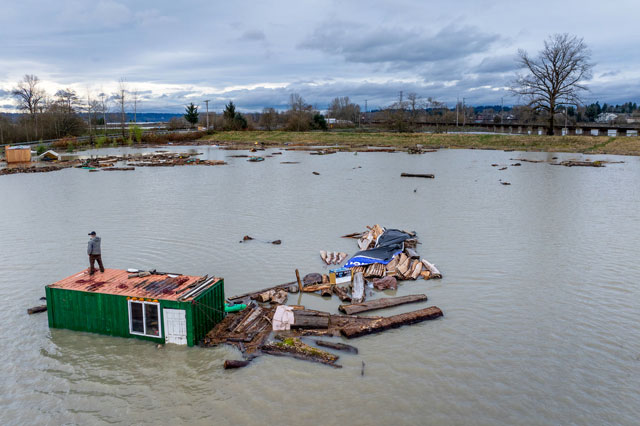
The latest atmospheric river storms have caused widespread devastation, forcing at least 1,300 rescues and assisted evacuations, claiming one life and inundating thousands of homes.
Atmospheric rivers, which carry vast amounts of moisture from the Pacific tropics, often appear like fire hoses on weather radar and are expected to cause even more severe flooding in the future as climate change leads to heavier rainfall and reduced snowfall.
While officials acknowledge that the delayed federal funds may not have prevented the immediate damage from this month’s storms due to the long-term nature of such projects, they stress that the purpose of these investments is to protect communities from future disasters.
“This event — and the one coming whenever in the future — reinforces the importance of investing in pre-disaster mitigation to reduce damages,” Cook said, adding that studies by the National Institute of Building Sciences show every dollar invested in mitigation efforts saves six dollars in recovery costs.
State authorities warn that without sustained federal support, Washington’s ability to shield its communities from increasingly frequent and intense flooding events could be severely compromised.